
Fleet Battle - Sea Battle
smuttlewerk interactiveBoard
4.610.82K Reviews
- Version
- 2.1.959
- Installs
- 10.00M
- Age Rating
- Everyone 10+
Screenshots
Our Review of Fleet Battle - Sea Battle
 Analysis by Appyee
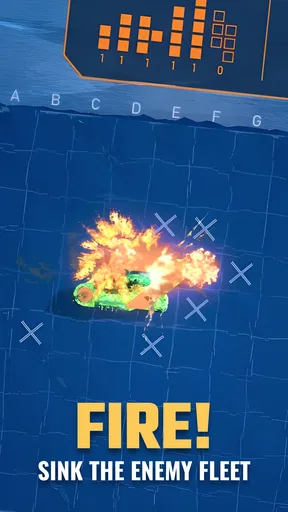
I enjoy board games that are easy to understand but difficult to play perfectly, and Fleet Battle - Sea Battle fits that description well. I can explain the basic idea in a few seconds: place a fleet, search the opponent’s grid, and try to sink every ship before the same happens to you. The appeal comes from the decisions between those simple actions. Every shot gives information, every miss changes the shape of the remaining search, and a careless placement can make an otherwise strong game uncomfortable from the start.
What makes this version worth considering is its flexibility. It is a free board game from smuttlewerk interactive, designed for both online and offline play. That combination matters because Battleship-style games are often used in short, casual moments rather than long sessions. I can play a quick match when I have time, then return to it later without needing the same kind of commitment demanded by a larger strategy game. Its Everyone 10+ rating also makes it a reasonable choice for families, although younger players may still need help understanding the value of planning rather than simply firing at random.
The game has built a substantial audience, with an average rating of 4.6 from around 221 thousand ratings and more than 10 million installs. Those numbers do not guarantee that every player will enjoy it, but they do suggest that the straightforward naval theme and compact strategy format have broad appeal. I found the strongest reason to try it is not spectacle; it is the way a familiar tabletop idea becomes convenient on a phone.
How the match feels from the first move
The opening minutes are approachable. You do not need to learn a large collection of units, complicated menus, or a long campaign structure before making a meaningful decision. The central task remains recognizable, which is helpful when I want a game that starts quickly. At the same time, the familiar rules leave room for personal habits. Some players spread their shots methodically, while others react aggressively to every hit. The game gives both styles a chance, though neither works well without adapting to the opponent.
That simplicity also affects perceived speed. A match can feel brisk when both sides make decisions quickly, but the rhythm naturally slows when each shot becomes more important. I would not describe that pause as a performance problem. It is part of the tension of a hidden-grid game: the board is visually simple, yet the information behind each square keeps changing. If you expect constant animation or rapid action, this may feel restrained. If you prefer a turn-based contest where thinking time has value, the pace is easier to appreciate.
Offline play is especially useful in ordinary situations. I can imagine using it during a journey, waiting for an appointment, or sharing a device with someone nearby when an internet connection is inconvenient. It also makes the game less dependent on whether another player is available at that exact moment. Online play, by contrast, gives the familiar format more unpredictability because a human opponent may follow patterns that are very different from mine.
The most important speed advantage is that the rules do not create a long learning delay. A new player can understand the objective immediately, while an experienced player can focus on probability, search patterns, and reading behavior. That makes it more accessible than many strategy games, but it also means the depth must come from decision-making rather than from a large progression system.
Small decisions that improve the experience
One useful habit is to treat the grid as an information problem instead of a collection of isolated guesses. After a miss, I avoid mentally returning to that area unless the surrounding knowledge makes it relevant. After a hit, I concentrate on confirming the direction and extending the search carefully rather than scattering shots elsewhere. This sounds obvious, but the phone format encourages quick tapping, and quick tapping is often what turns a promising position into a poor one.
Fleet placement deserves the same attention. A predictable arrangement can make the first part of a match easier for the opponent, especially if ships are placed in familiar corners or in neat patterns. I prefer to vary the structure of my fleet from match to match. The goal is not to discover one perfect arrangement; it is to avoid giving away a habit that another player can exploit. This is one of the less visible strengths of the format: the setup phase is not merely preparation, but an early psychological exchange.
Another practical tip is to slow down after a hit. The temptation is to fire immediately at a neighboring square, yet a hit changes the value of nearby choices. I get better results when I first consider whether the target could be horizontal or vertical, then use the next move to test that possibility. This is a small workflow change, but it makes the game feel more strategic without adding complexity.
What happens during repeated or heavy use
During short sessions, the game’s compact design is its main advantage. I can finish a match without setting aside a large block of time, and the board remains easy to read. The heavier demand comes from repetition rather than from a single round. Playing several matches in succession can expose the limits of a simple ruleset: once I understand the common search patterns, the challenge depends increasingly on the opponent’s choices and on whether I am willing to keep varying my own approach.
That is where online play can feel more valuable than repeating the same offline routine. Human opponents introduce uncertainty, and even a basic fleet game becomes more interesting when the other side does not behave exactly as expected. Offline play remains useful for practice and convenience, but I would treat it as the dependable option for filling a spare moment rather than the only reason to keep the game installed for months.
Heavy use also raises a practical question: does the game become tiring because of delays, clutter, or resource demands? My impression is that the board-centered presentation keeps the experience focused. There is less visual noise than in many action-oriented mobile games, so the phone is not constantly processing a busy scene from the player’s point of view. Still, a simple board does not automatically mean every device will feel identical. Older hardware may show more noticeable pauses when moving between screens or handling online activity, while newer phones should have an easier time with the modest visual workload.
The free entry point lowers the risk of trying it, but the presence of in-app purchases is worth keeping in mind. Individual purchases range from $0.99 to $24.99, so I would recommend checking each purchase carefully before confirming it. Players who want a completely unrestricted, purchase-free experience may prefer a traditional physical set or a simpler digital alternative. For everyone else, the free starting point makes it possible to judge the core game before deciding whether any optional spending feels worthwhile.
Reliability, recovery, and the practical details
Reliability in a game like this is not only about whether it opens. It is also about whether a match feels understandable when something interrupts the session. The offline option gives the game a useful layer of resilience: if connectivity is inconvenient, the basic activity can still be available. That is a meaningful advantage over board games built entirely around live online interaction.
Online matches naturally depend more on the quality of the connection and on the other player’s availability. I would choose offline play when I need predictable access, then use online matches when I am prepared for a less controlled rhythm. This distinction helps set realistic expectations. It is not a replacement for a fast real-time action game, and it should not be judged by the same standard. Its best online moments come from the uncertainty of the opponent, not from speed.
Recovery is also tied to how much progress a player expects between matches. Fleet Battle - Sea Battle is easiest to return to when I want another self-contained contest. If your ideal mobile game is one with a large narrative, extensive character development, or a long-term collection to maintain, this format may feel too focused. The benefit is that I can step away without feeling that I have abandoned a complicated routine. The trade-off is that the game’s motivation comes mainly from improving decisions and winning more often, not from a deep story or elaborate world.
The current version is 2.1.959, and the listed minimum operating system is 7.1. That makes the game accessible to a broad range of compatible devices, at least on paper. I would still keep the operating system updated where possible, because compatibility and everyday smoothness are not always the same thing. A phone that technically meets the minimum may offer a less comfortable experience than a newer device, particularly when storage is tight or many other applications are active.
Where device limits matter most
This is not the sort of game I would choose to test a phone’s graphics performance. Its appeal is in the board, the hidden information, and the decisions, not in demanding visual effects. That is good news for people using modest hardware, because the game’s identity does not depend on a powerful processor or a large display. A smaller screen can still work, although players who like to inspect the whole grid at once may find a larger phone or tablet more comfortable.
Battery expectations should also be sensible. A board game with a restrained presentation is unlikely to compete with a graphically intensive action title for attention from the battery, but online connectivity and long sessions can still affect a device more than a single offline match. I would use offline mode when conserving connectivity matters and reserve extended online play for situations where the phone is comfortably charged.
Storage and background activity are practical considerations too. The game itself is easier to accommodate than a large open-world title, but a phone crowded with applications can make any game feel less responsive. Closing an unusually busy application mix before playing is a sensible step if the device is older. I would not install this expecting it to transform weak hardware into a smooth gaming machine; I would install it because the gameplay remains worthwhile without demanding a flagship phone.
For families, the age rating of Everyone 10+ provides a useful starting point, but the real question is whether the child enjoys quiet planning. A player who wants immediate action may lose interest, while someone who likes puzzles and turn-based competition may find the rules inviting. I would also explain that losing is often informative: a poor result can reveal a repeated placement pattern or an impatient search style, which gives the next match a clear purpose.
How it compares with familiar alternatives
Compared with a physical Battleship set, the mobile version is more convenient and easier to use alone. There is no need to find the box, arrange the pieces, or persuade someone nearby to sit down for a match. Offline play preserves some of the casual accessibility, while online play extends the possible opponent pool beyond the room. The physical alternative still wins for face-to-face atmosphere and for players who enjoy handling pieces on a table.
Compared with generic puzzle games, this one offers a stronger social and competitive identity. The hidden fleet creates a direct relationship between my decision and the opponent’s response. A standard solo puzzle may be better for someone who wants a fixed challenge with no human unpredictability, but Fleet Battle is more satisfying when I want to read another player’s behavior and adjust my plan.
Compared with large strategy games, it is much easier to begin and much less demanding to maintain. There are no armies to manage across a broad map or complicated systems to study before the first meaningful choice. That is exactly why it works for short sessions. The limitation is equally clear: players seeking deep resource management, a campaign, or a rich progression loop will find a smaller strategic canvas here.
The strongest comparison depends on the situation. I would choose this game over a physical set when portability matters, over an action game when I want to think without pressure, and over a complex strategy title when I only have a few minutes. I would choose something else when I want dramatic visuals, a story, or a substantial solo journey that changes over time.
Who should install it, and who should skip it
I recommend it to players who enjoy classic board-game logic, short competitive sessions, and the satisfaction of narrowing down possibilities. It is also a good fit for someone looking for a game that can move between offline convenience and online competition. The free price makes experimentation easy, and the familiar rules mean that a friend or family member can join without studying a manual first.
I would be more cautious if you dislike repeated matches with similar basic objectives. The naval theme changes the presentation, but the central loop remains focused on placement and search. Players who need constant new mechanics may find that repetition arrives sooner than expected. I would also skip it if in-app purchases make you uncomfortable, even though the game is free to start, or if your main priority is a visually spectacular experience.
For a realistic everyday use case, imagine having ten minutes before a meeting. An offline match gives that spare time a clear beginning and end, without requiring a long campaign commitment. On a quiet evening, online play can provide a more unpredictable contest. If a connection is unreliable, the offline option is the safer choice; if you want the challenge of another person’s habits, online play is the better fit.
My performance verdict after using the game
Fleet Battle - Sea Battle is best understood as a focused board game rather than a broad mobile entertainment package. Its perceived speed comes from simple rules and compact turns, while its real depth comes from how carefully I use information. Resource demands should be modest compared with visually intensive games, but older devices, crowded storage, and extended connected sessions can still influence comfort. The offline mode gives it practical recovery when connectivity is not ideal, and the online option prevents the experience from feeling limited to one predictable opponent.
There are trade-offs. The game does not provide the spectacle or variety of a larger strategy release, and repeated matches may feel familiar once the basic search habits become automatic. The purchase range, from $0.99 to $24.99 per item, also means I would pay attention during checkout rather than treating every optional purchase casually. Those points do not undermine the core experience, but they matter when deciding whether it fits your habits.
After weighing those limitations, I see it as a dependable recommendation for anyone who wants a recognizable strategy board game that works in both connected and disconnected situations. The developer, smuttlewerk interactive, keeps the concept centered on the part that matters: making a better guess, learning from a miss, and refusing to become predictable. If you want a compact game that rewards patience more than reflexes, this is one I would happily keep installed.
My final advice is to approach it with the right expectation. Do not install it looking for a campaign or a high-energy action experience. Install it when you want a portable fleet duel, a quick mental exercise, or a simple way to compete with another person without learning a complicated ruleset. In that narrower role, Fleet Battle - Sea Battle delivers a satisfying balance of accessibility, tactical thinking, and practical flexibility.
Verdict
Strengths of Fleet Battle - Sea Battle
- Simple rules make it easy for new players to start quickly.
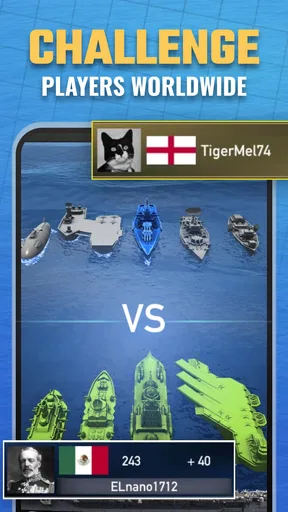
- Online multiplayer adds variety beyond matches against the computer.
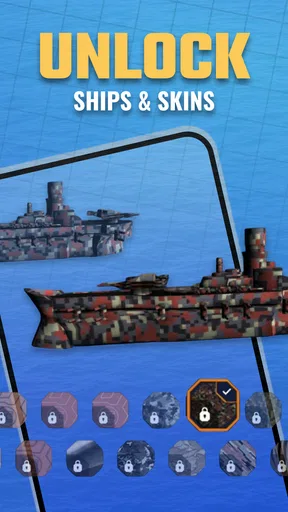
- Different ship layouts encourage tactical planning before each battle.
- Matches are generally short and suitable for quick gaming sessions.
- Clean interface keeps the battlefield easy to read on smaller screens.
Limitations of Fleet Battle - Sea Battle
- Random shots can make some victories or defeats feel luck-based.
- Online play may depend heavily on the quality of your internet connection.
- The game can become repetitive after extended play sessions.
- Some features or content may be limited without optional purchases.
- Ads may interrupt the experience, especially for free players.
Similar Picks in This Category
View All
Ludo King®
Gametion4.1

Ludo
Yarsa Games4.6

Tile Master® - Matching Game
Higgs Studio3.6

Checkers Online
CC Games4.6

Dominoes
Loop Games4.7

Chess
Chess Prince4.6
Frequently Asked Questions
What is Fleet Battle - Sea Battle?
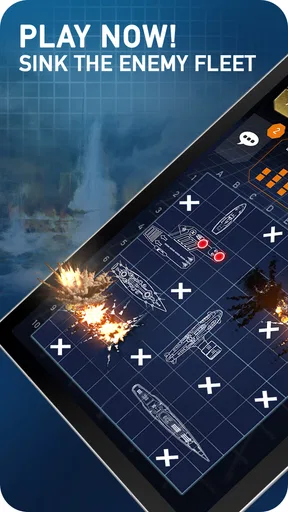
Fleet Battle - Sea Battle is a digital version of the classic Battleship game, where you place a fleet on a grid and try to locate and destroy your opponent’s ships before they find yours. It combines familiar turn-based strategy with different game modes, naval-themed graphics, and quick matches suitable for casual play or longer competitive sessions.
How do you play Fleet Battle - Sea Battle?
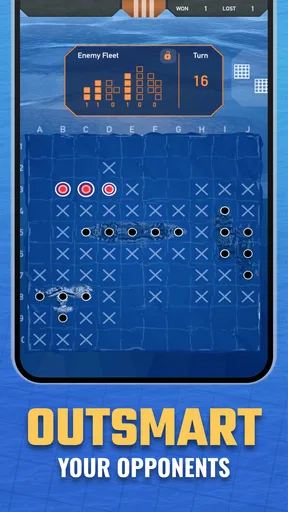
Before a match begins, you arrange your ships on your side of the ocean grid, choosing positions that make them difficult to discover. During your turn, you select a coordinate to fire at the opposing fleet. Hits help you identify ship locations, while misses provide information about areas to avoid. The winner is the player who sinks the entire enemy fleet first.
Can Fleet Battle - Sea Battle be played offline?
The game generally supports matches against computer-controlled opponents, making it possible to enjoy the core Battleship experience without relying on another player being online. Offline availability can depend on the specific version and device, so some features, advertisements, updates, or multiplayer options may require an internet connection. Check the app listing for the latest details.
Does Fleet Battle - Sea Battle offer multiplayer modes?
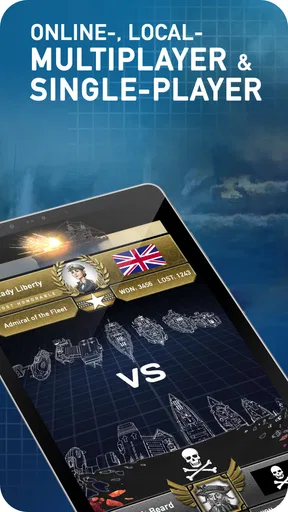
Fleet Battle - Sea Battle is designed to support competitive play, and available multiplayer options may include playing against friends, other online users, or opponents through a local connection, depending on the platform version. Multiplayer rules and requirements can vary, so players should review the in-game mode selection and account or connection requirements before starting a match.
Is Fleet Battle - Sea Battle free to download and suitable for children?
Fleet Battle - Sea Battle is commonly offered as a free download, although the app may include advertising, optional purchases, or additional content depending on the Android or iOS release. Its simple turn-based rules make it accessible to children and families, but parents should review privacy settings, online interaction features, and purchase controls before allowing younger players to use it.
Play our best games!


